


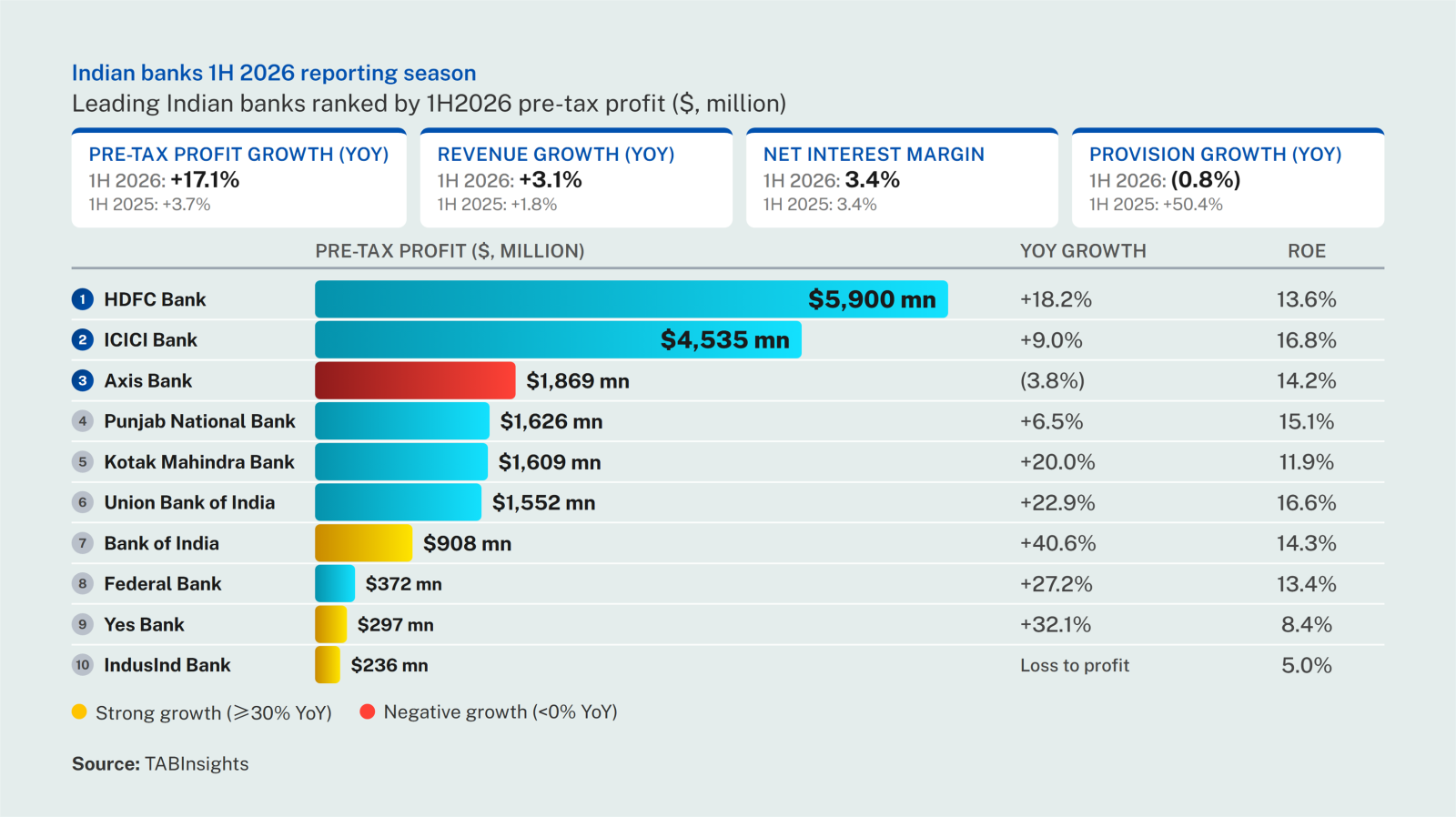
Indian lenders posted stronger first-half profits as lower loan provisions boosted earnings, but weak revenue growth and margin pressure point to a more challenging outlook.
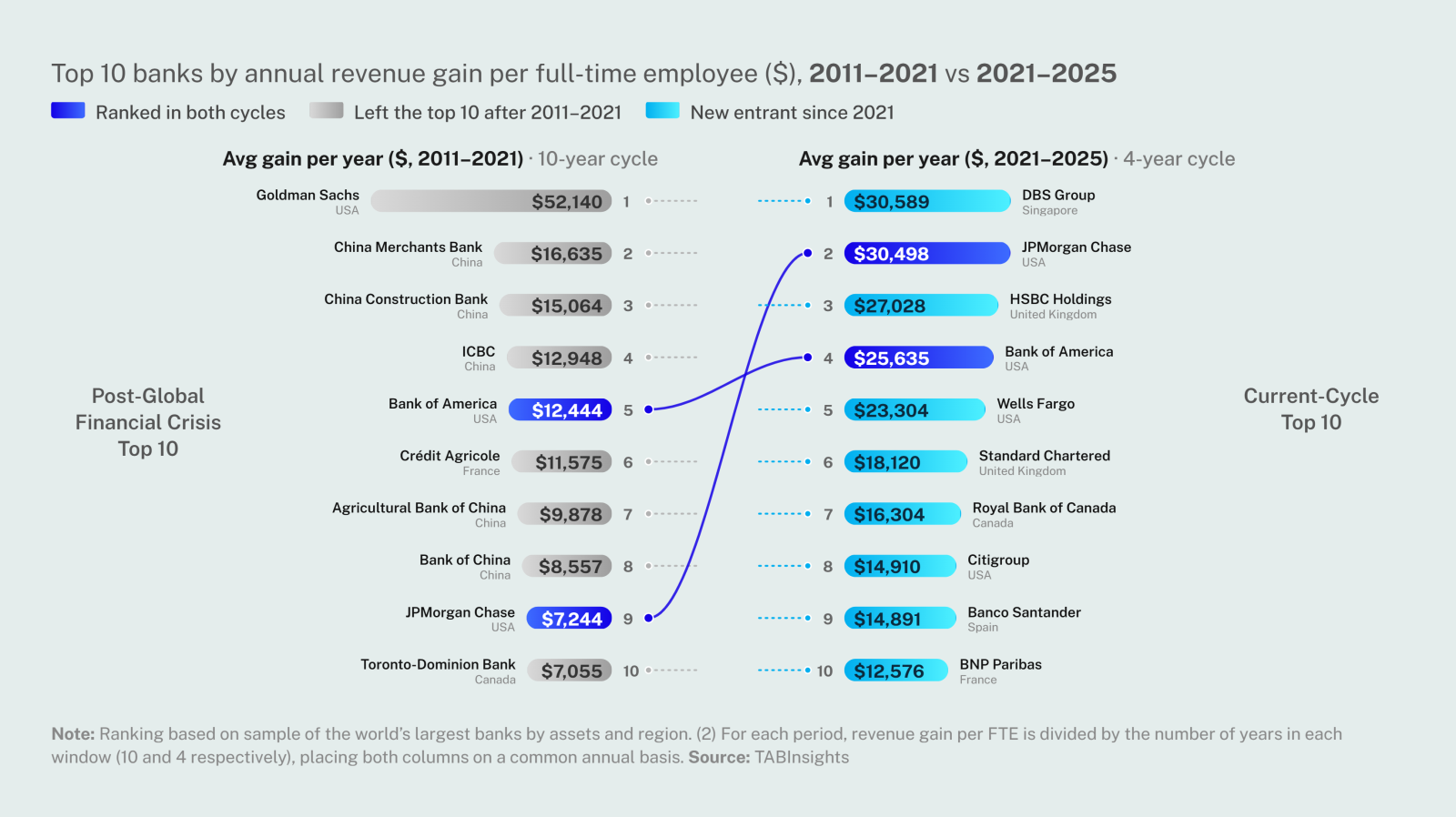
Data from 25 of the world’s largest banks by assets across regions shows that leading institutions are not only accelerating existing work but also building the capacity to serve more customers, process higher volumes of activity and grow revenue without increasing resources at the same pace.
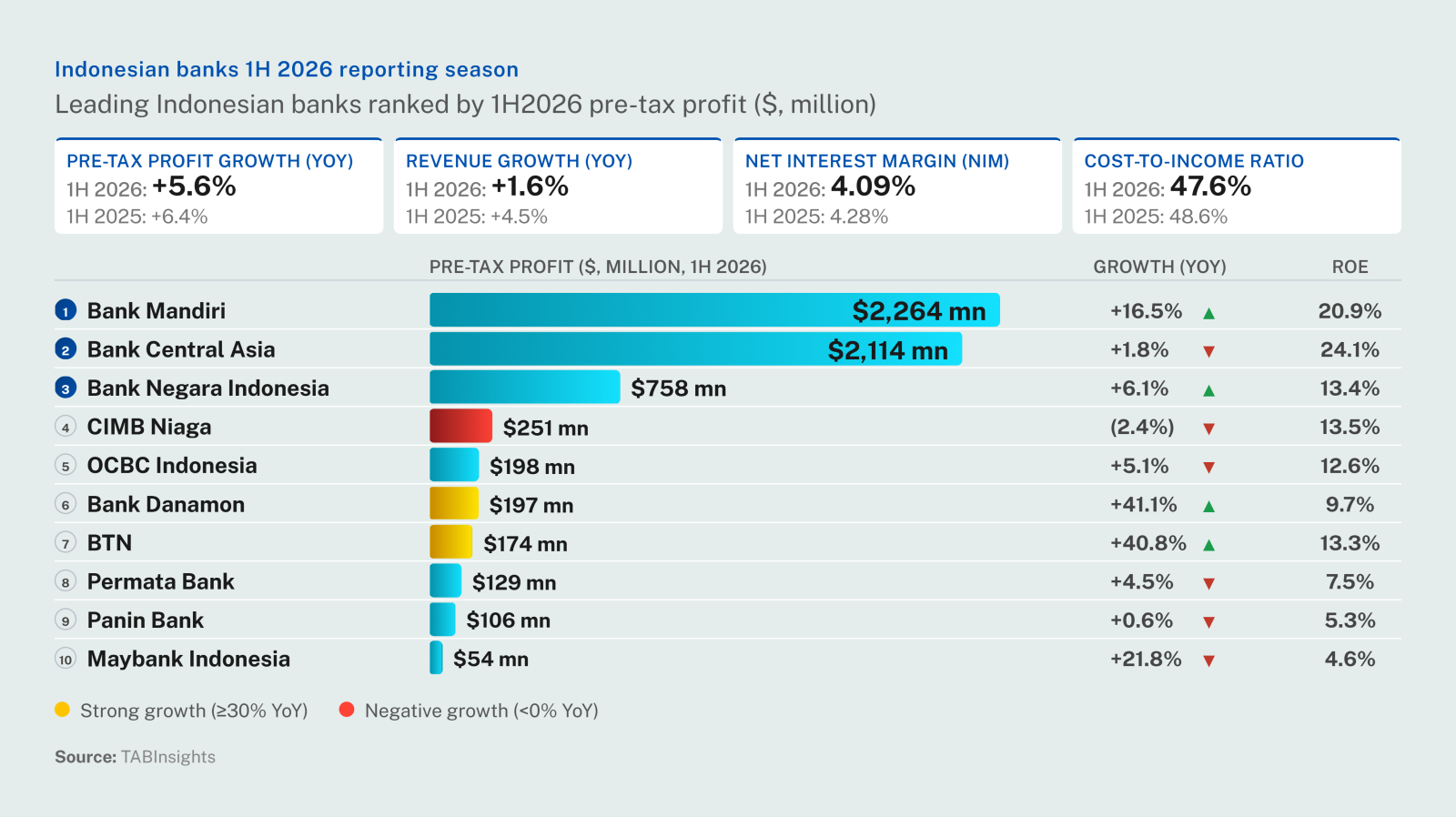
Profit growth slowed among leading Indonesian banks in the first half of 2026 as weaker revenue and narrower margins weighed on earnings. Lower credit costs and improved efficiency, however, helped several large lenders maintain stronger profit growth.

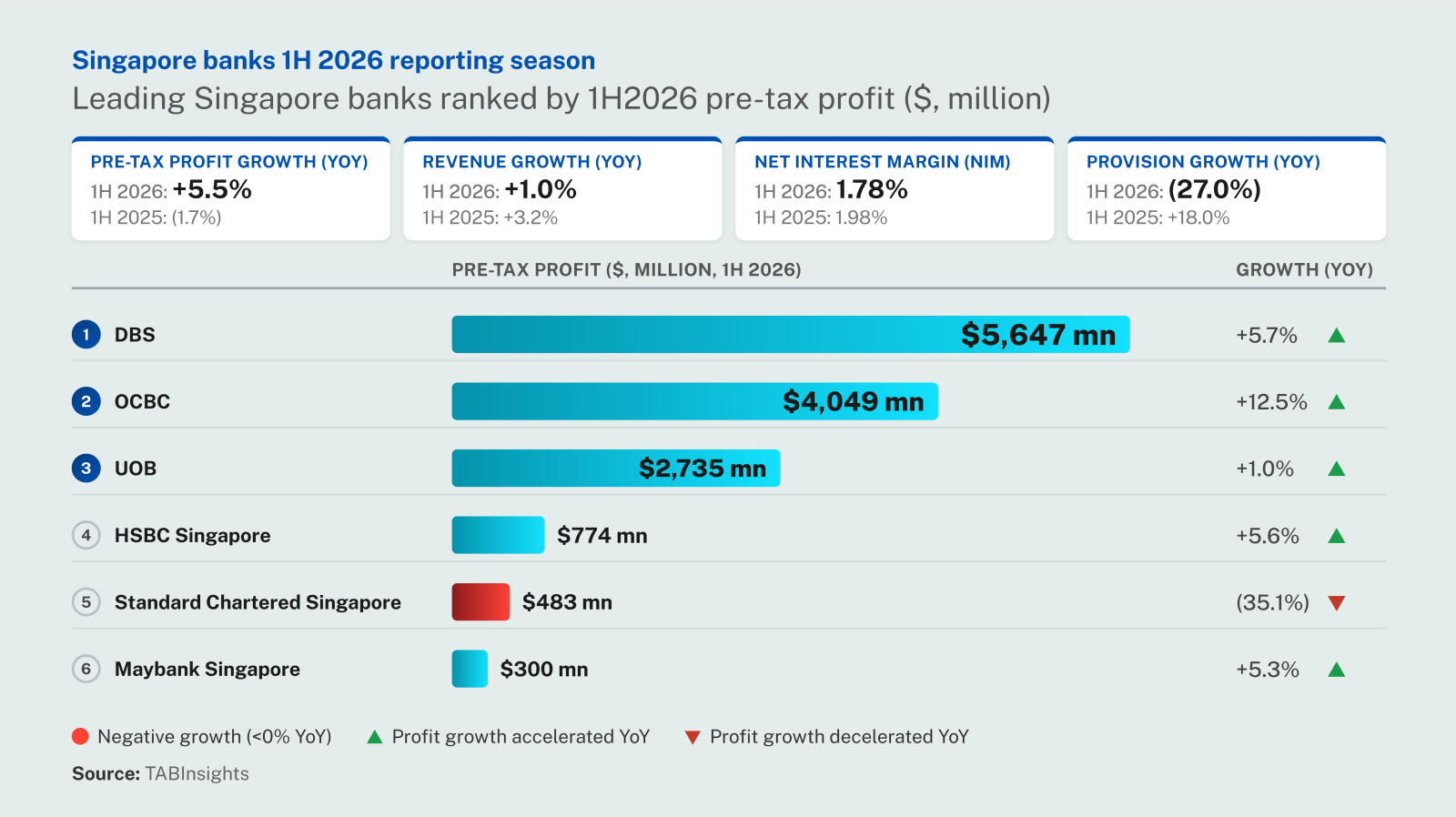
Singapore’s banks turned to non-interest income as margins compressed in the first half of 2026 (1H2026), but the earnings cushion was uneven. OCBC’s broader revenue mix supported stronger profit growth, while UOB’s experience showed that wealth expansion alone could not make up for weaker net interest income.
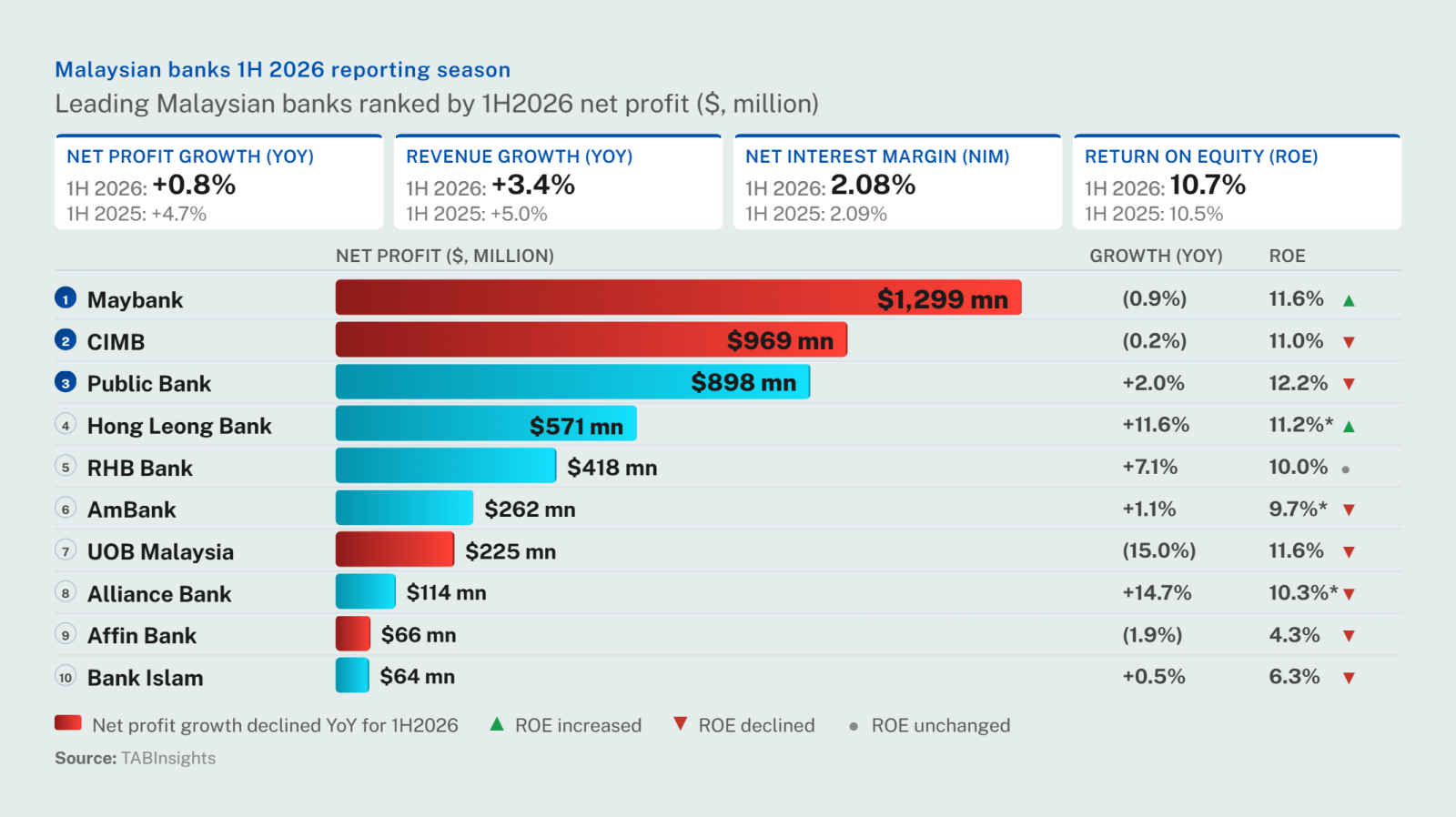
Malaysian banks' net profit was broadly flat in the first half of 2026 (1H2026), but their core lending businesses did not drive the result. Retail banking profit fell or stalled at most large groups, while corporate banking profit was likely flat. Treasury and markets income, wealth management and fund management provided most of the growth. Hong Leong Bank and Alliance Bank were the clearest exceptions, with broad-based operating strength.
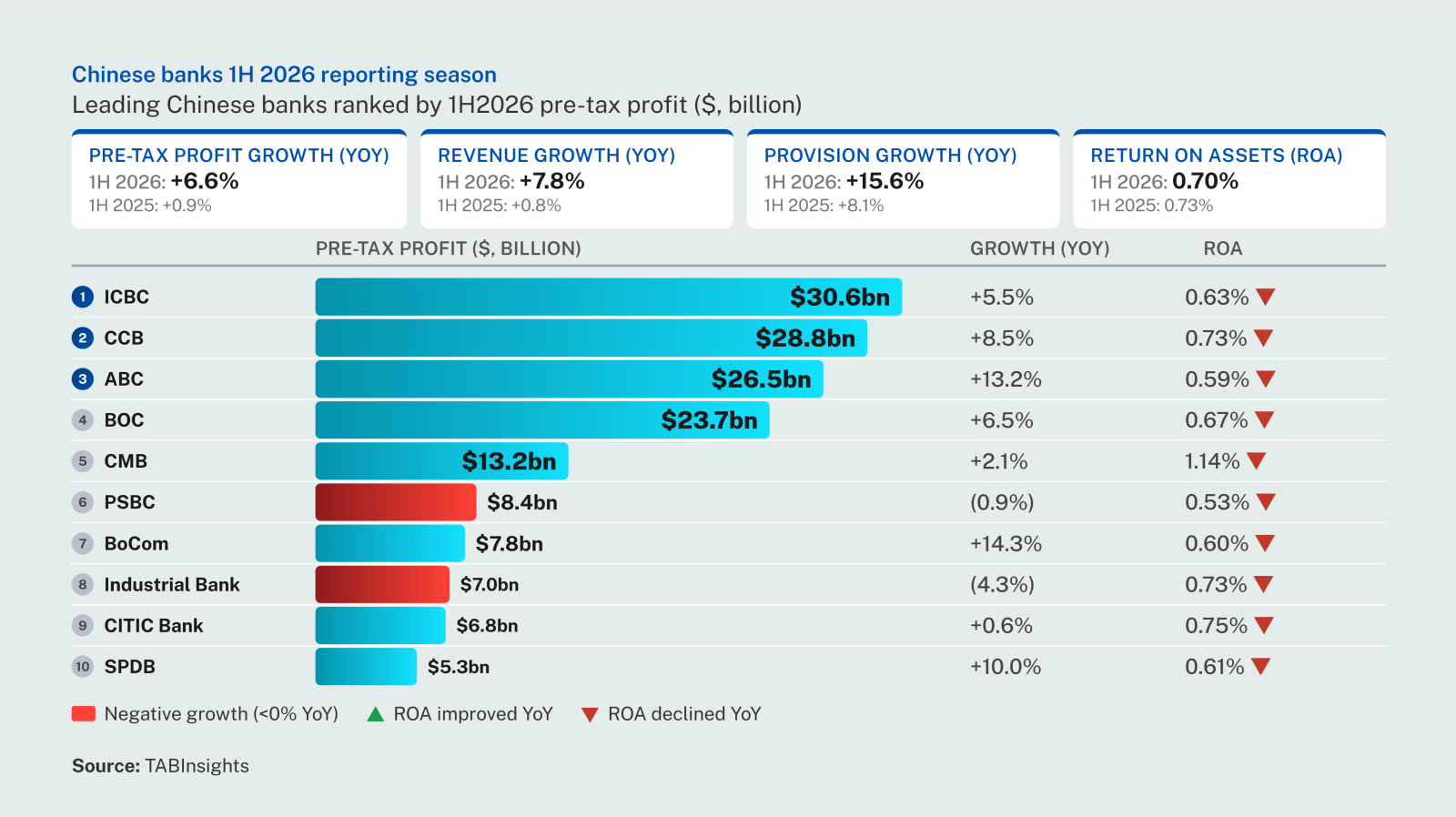
Leading Chinese banks delivered stronger earnings growth in the first half of 2026 (1H2026), but weaker loan demand, rising credit costs and continued pressure on asset yields kept returns under pressure.
Most large banks have adopted AI, but few have rebuilt around it. Governance, architecture and strategic priorities will determine who scales AI successfully.
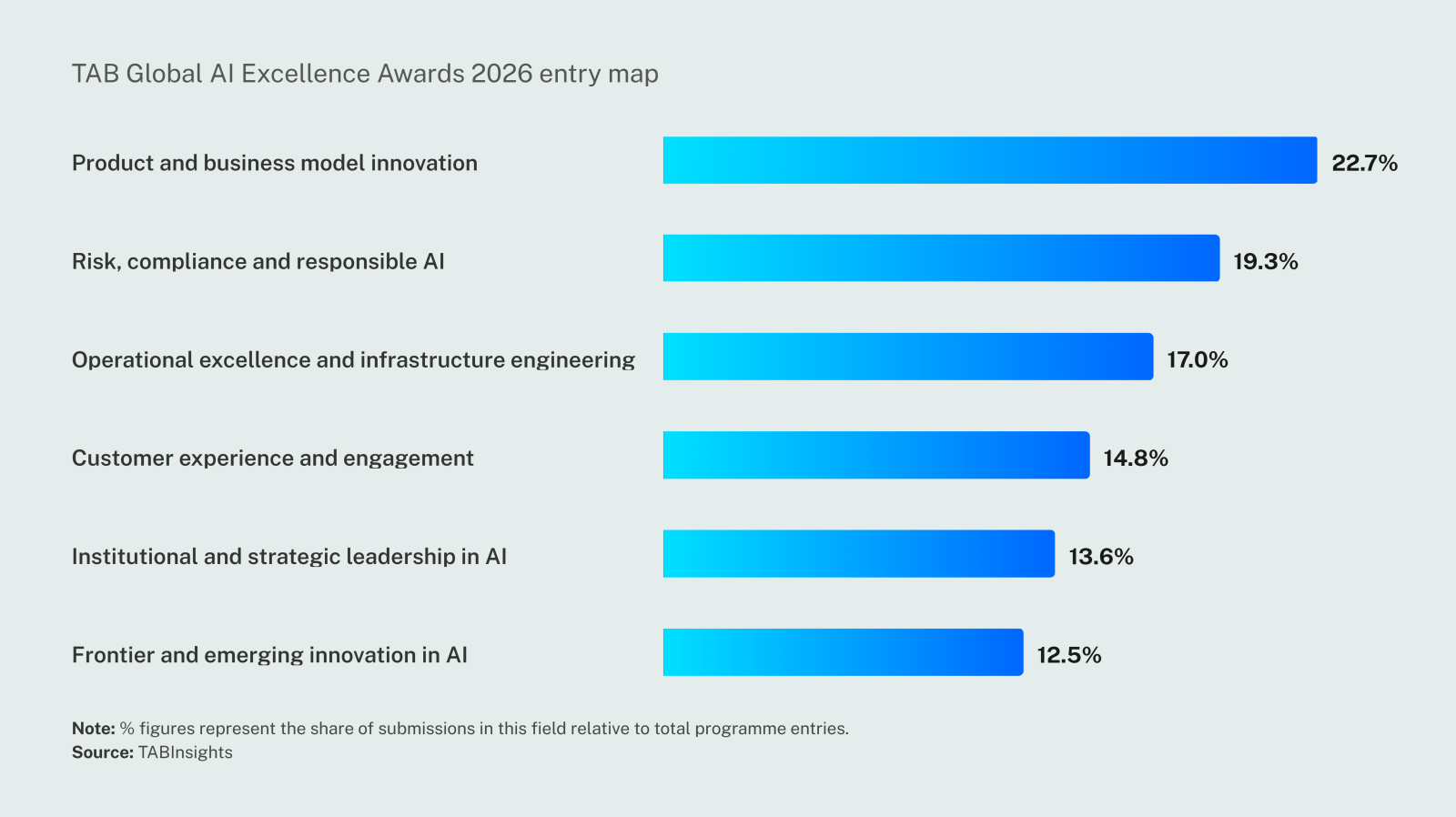
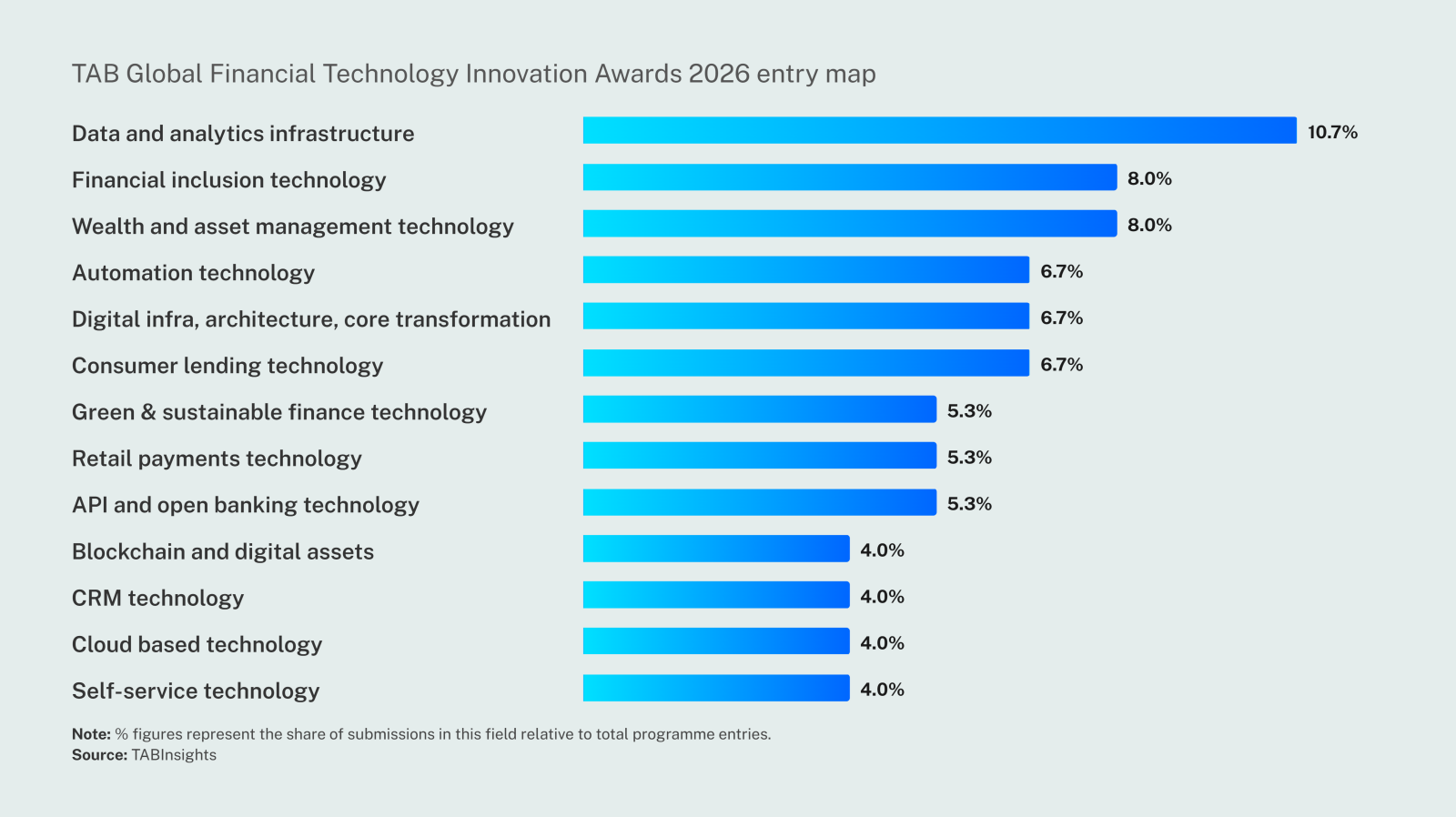
Key emerging trends from this year's awards show the industry's centre of gravity shifting to the foundations — data, architecture, resilience and rails — that will decide which banks can move fastest.