


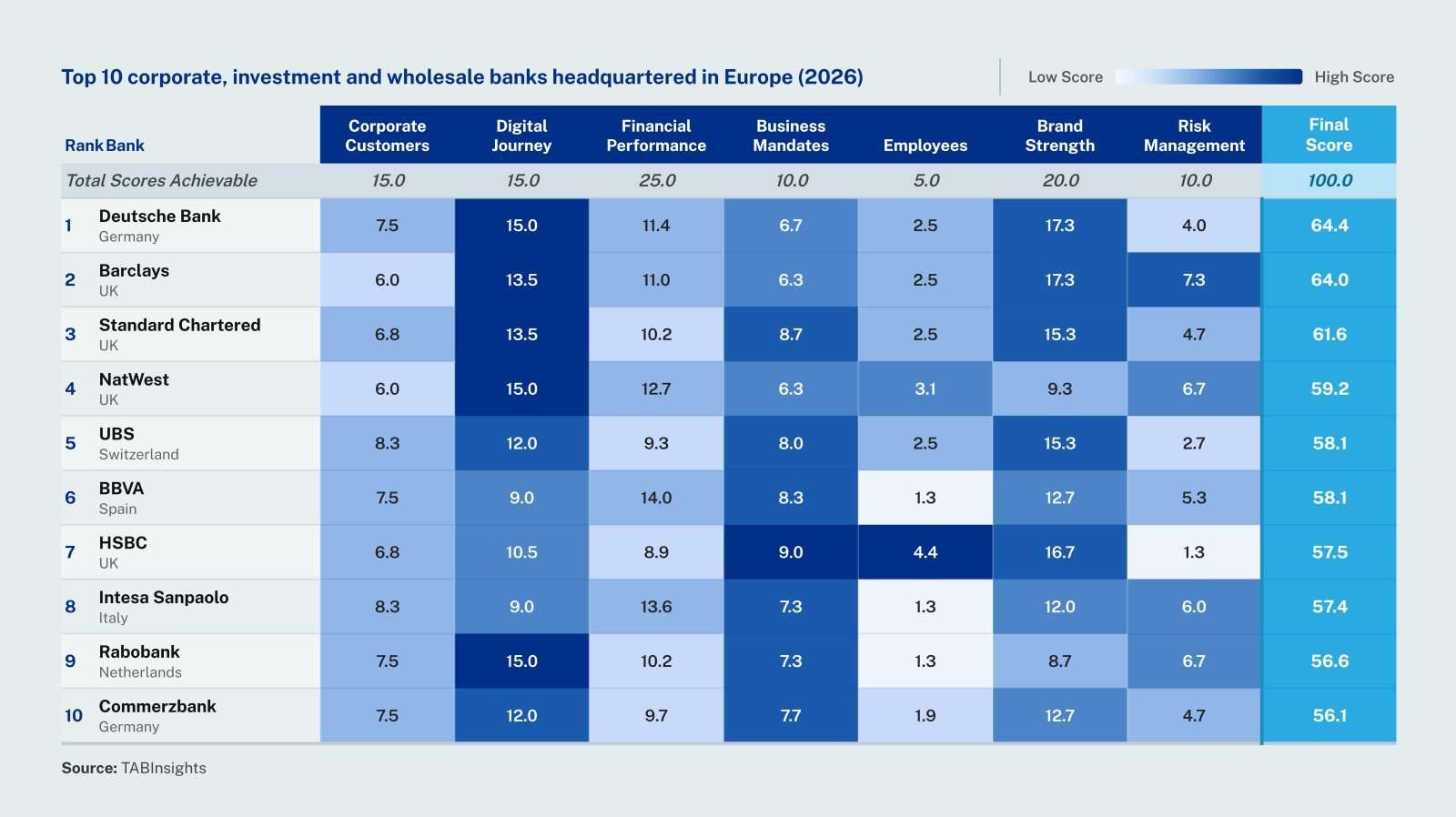
Deutsche Bank leads the 2026 TABInsights CIW ranking among Europe-based corporate, investment and wholesale banks, as digital capability, operational efficiency and franchise strength increasingly differentiate the region’s top institutions.
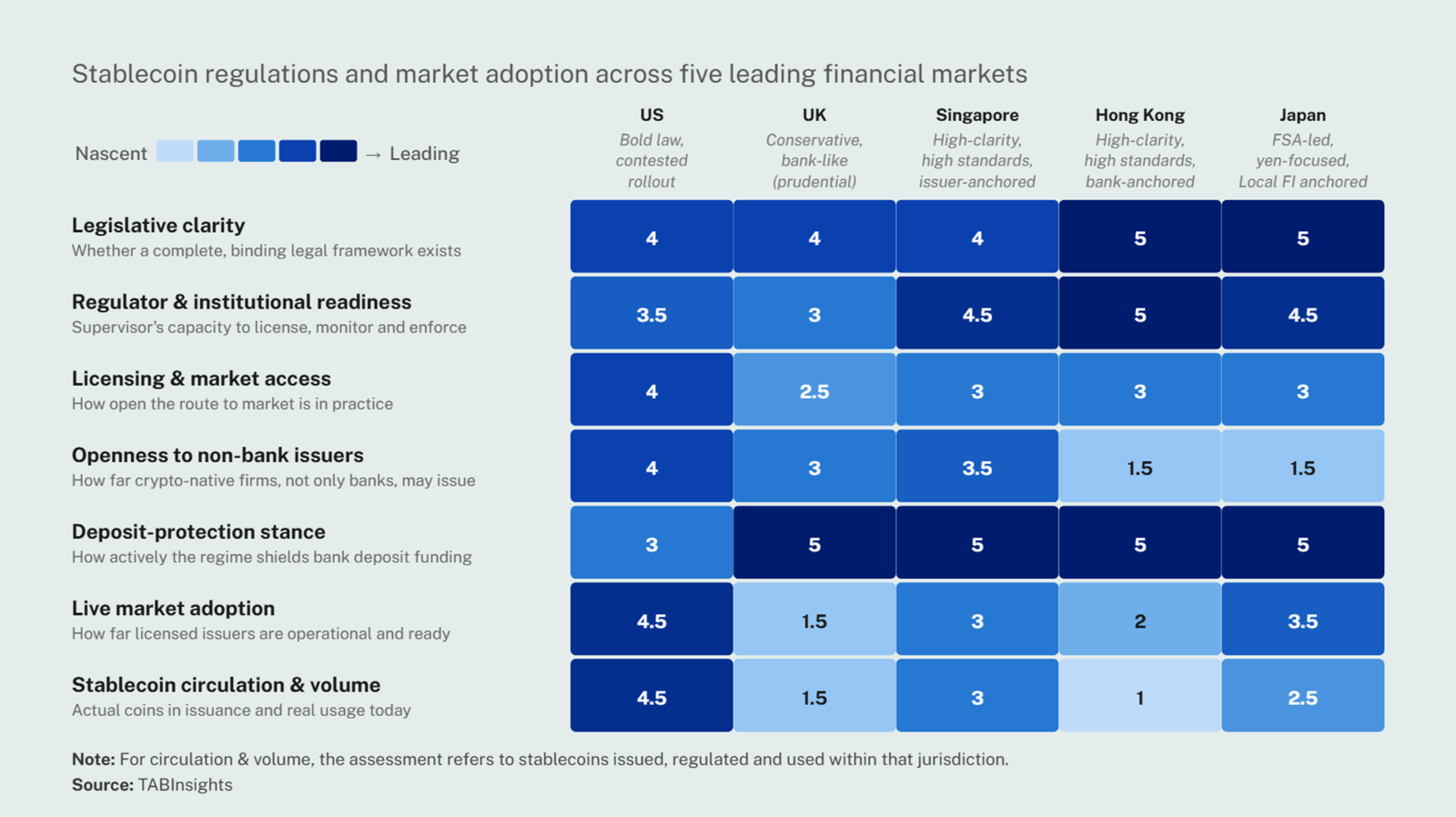
With the July 2026 deadline for US agencies to finalise the implementation of the GENIUS Act approaching, we examine five of the world’s most consequential stablecoin regimes, the United States, United Kingdom, Singapore, Hong Kong and Japan. While these jurisdictions have largely aligned on what constitutes stablecoin, none has yet delivered a commercially scalable market. The real contest has shifted to access, distribution, commercial viability and control—factors that will determine who builds the next generation of payment infrastructure.

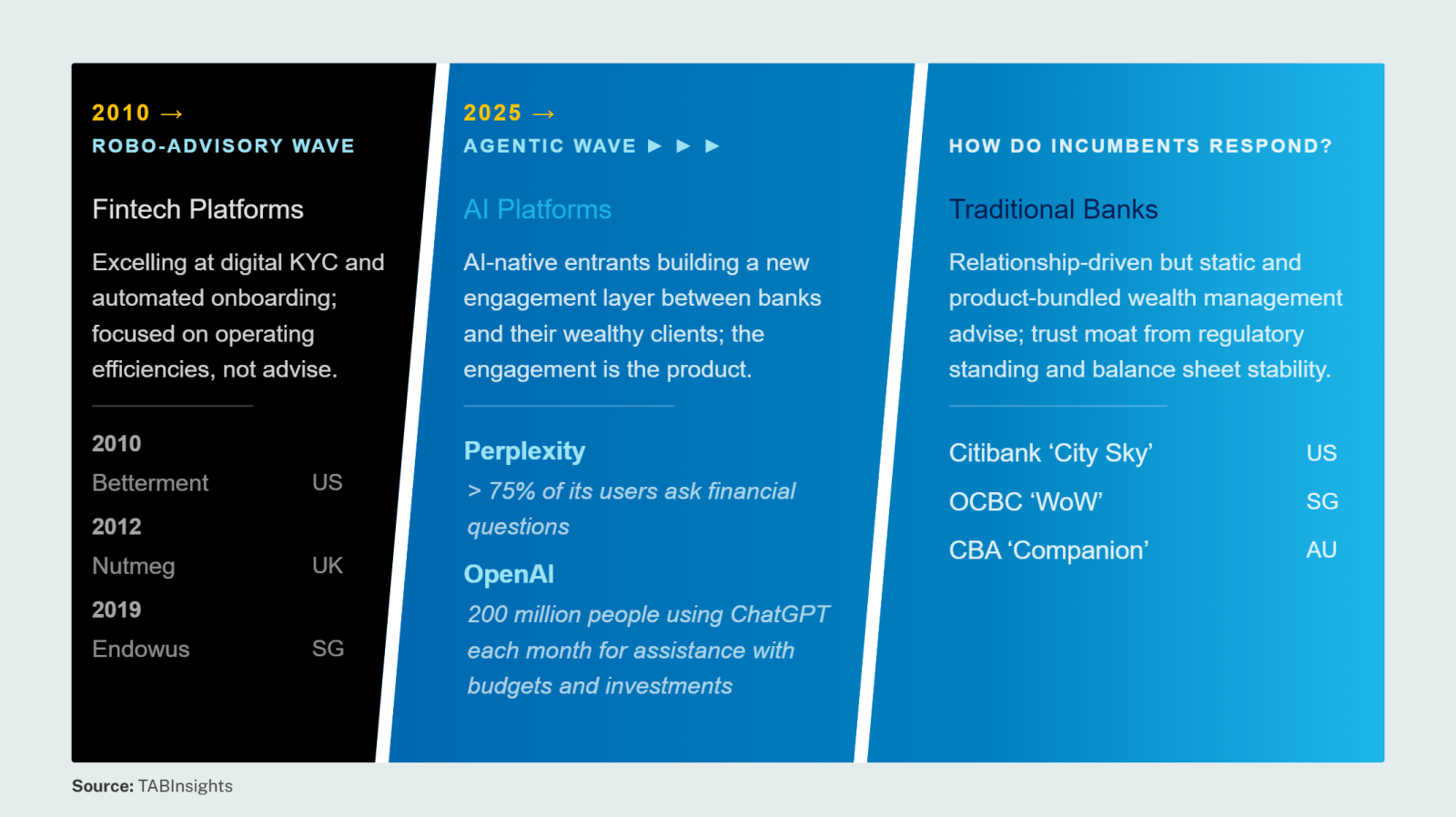
Banks overcame the robo-adviser challenge by retaining control of the client relationship. The next battleground is the financial conversation itself, as AI platforms become the primary interface through which customers seek advice, interpret information and make decisions.
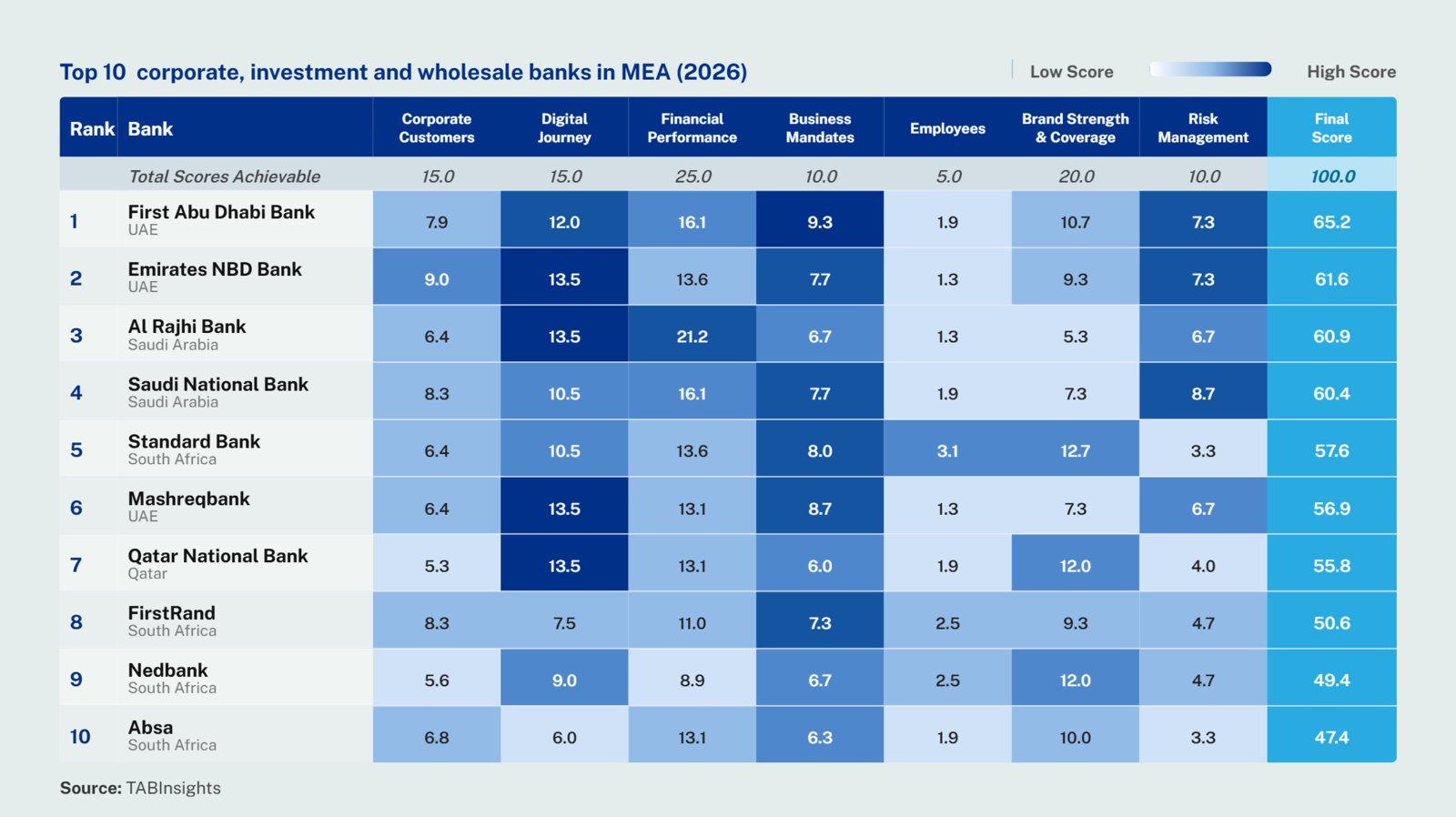
The 2026 ranking highlights how Gulf and African banks are pursuing different strategies to strengthen their corporate and wholesale franchises, with digital capability, regional connectivity, capital markets expertise and disciplined financial performance emerging as key competitive differentiators.
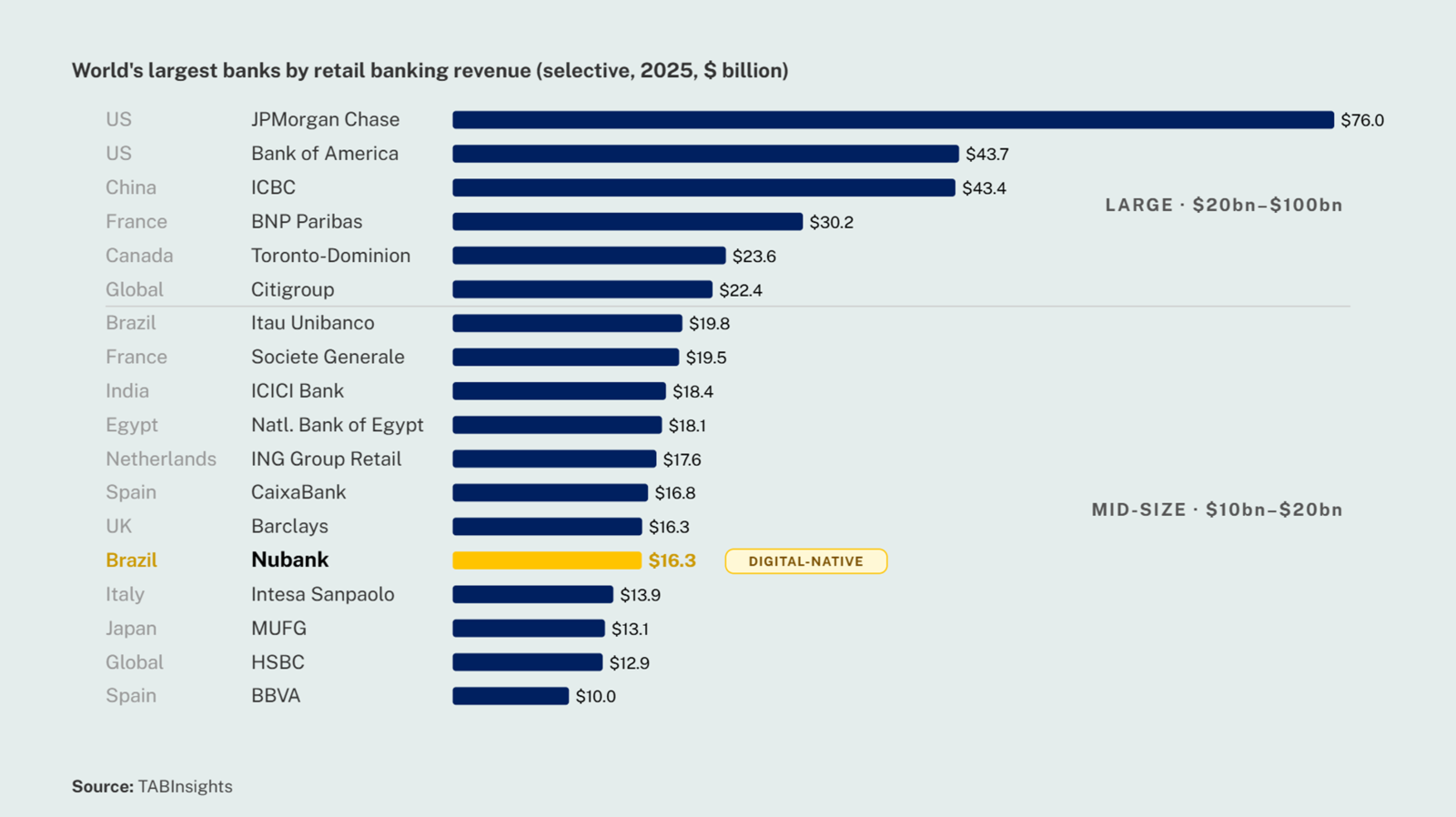
A decade ago, Nubank was a credit card start-up operating out of São Paulo. Today, at $16.3 billion in retail banking revenue (2025), it has surpassed HSBC and Standard Chartered’s global retail banking businesses and is on track to overtake Itaú Unibanco in Brazil in 2026 and Citigroup by 2027. What is emerging is not just rapid growth, but the early stages of a long-term strategy to build a global retail banking franchise.
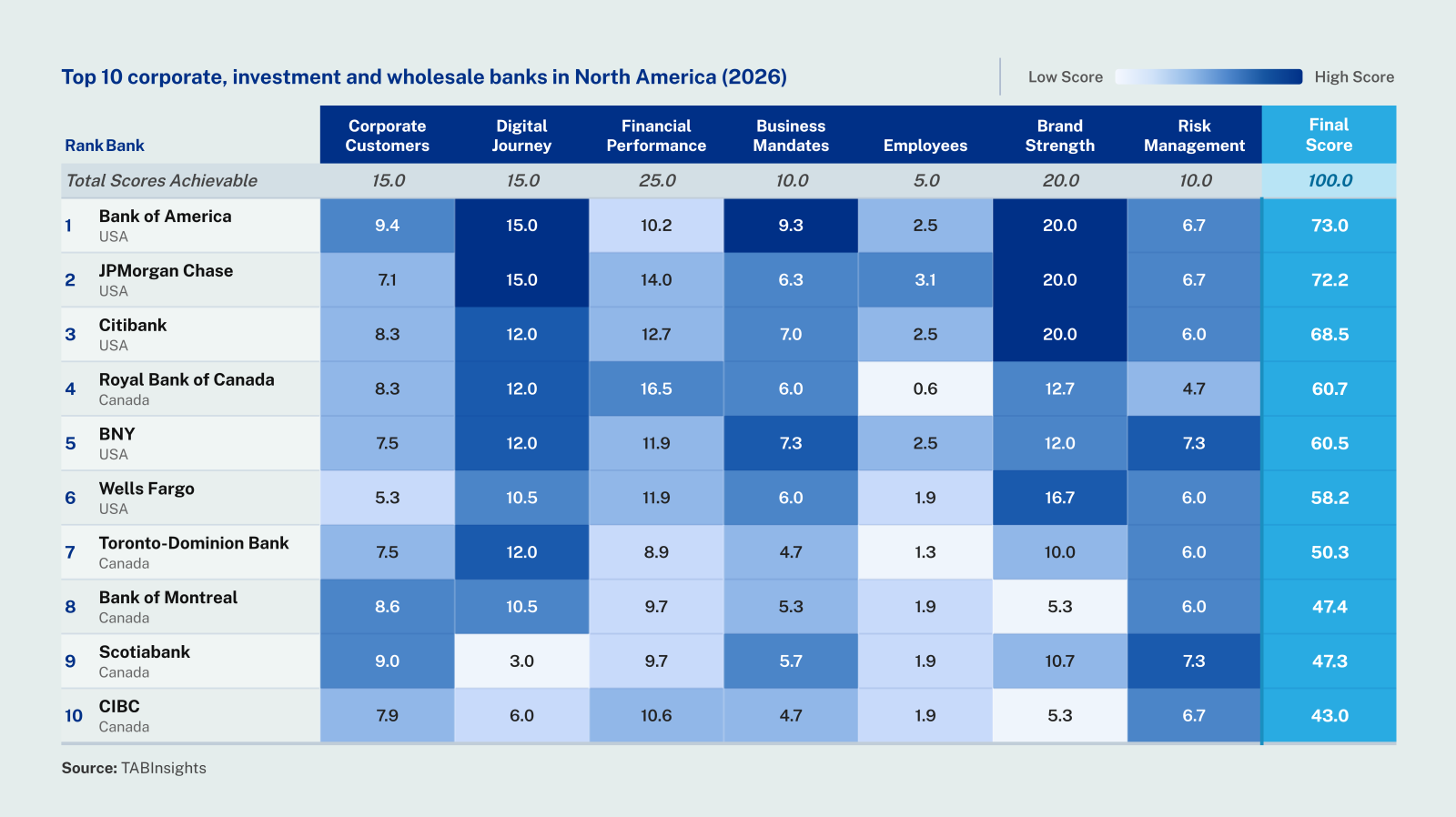
North America's leading corporate and investment banks retained their global dominance in 2025, although their performance revealed widening efficiency gaps as revenue growth, regulatory changes and remediation costs shaped results.
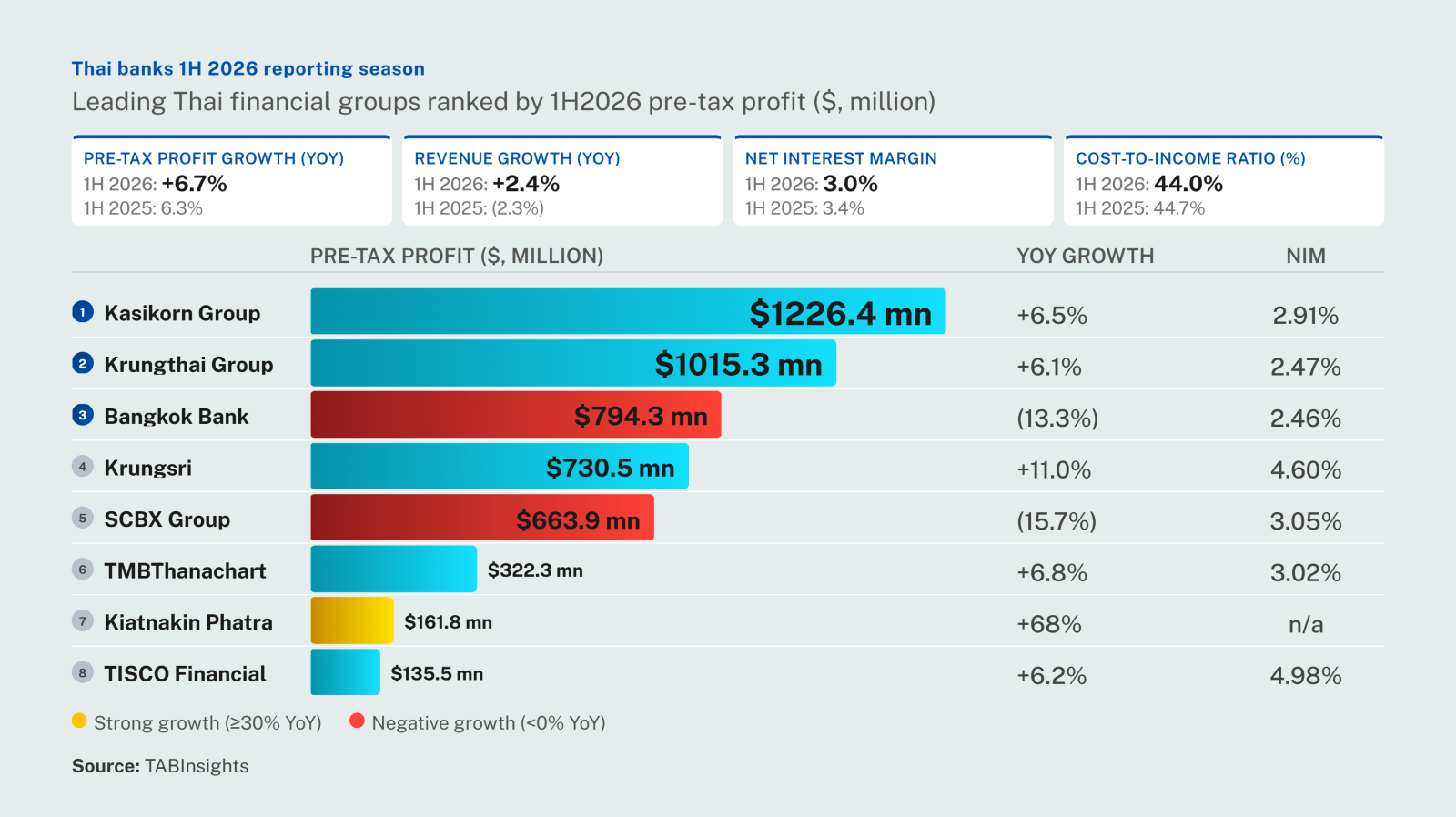
Thai financial players entered the lower-rate cycle in the first half of 2026 with strong balance sheets and capital positions, but the key differentiator was how effectively they repriced deposits as asset yields declined, rather than credit quality. Krungsri emerged as the best-performing financial institution among its peers.
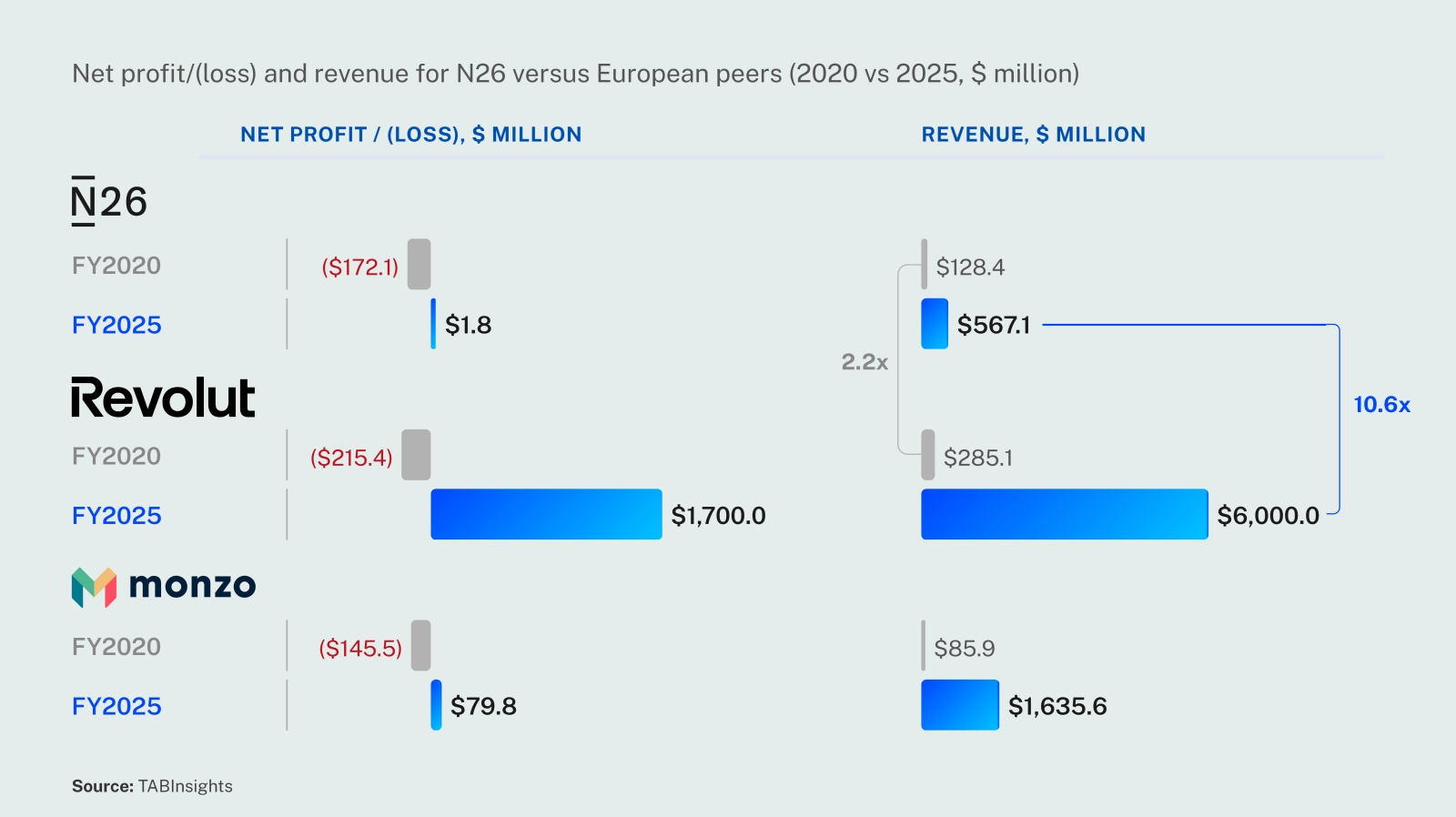
N26 delivered its first full-year net profit in 2025, but a decade of prioritising growth over bank-grade controls left the German fintech trailing European rivals, prompting a sweeping leadership overhaul.
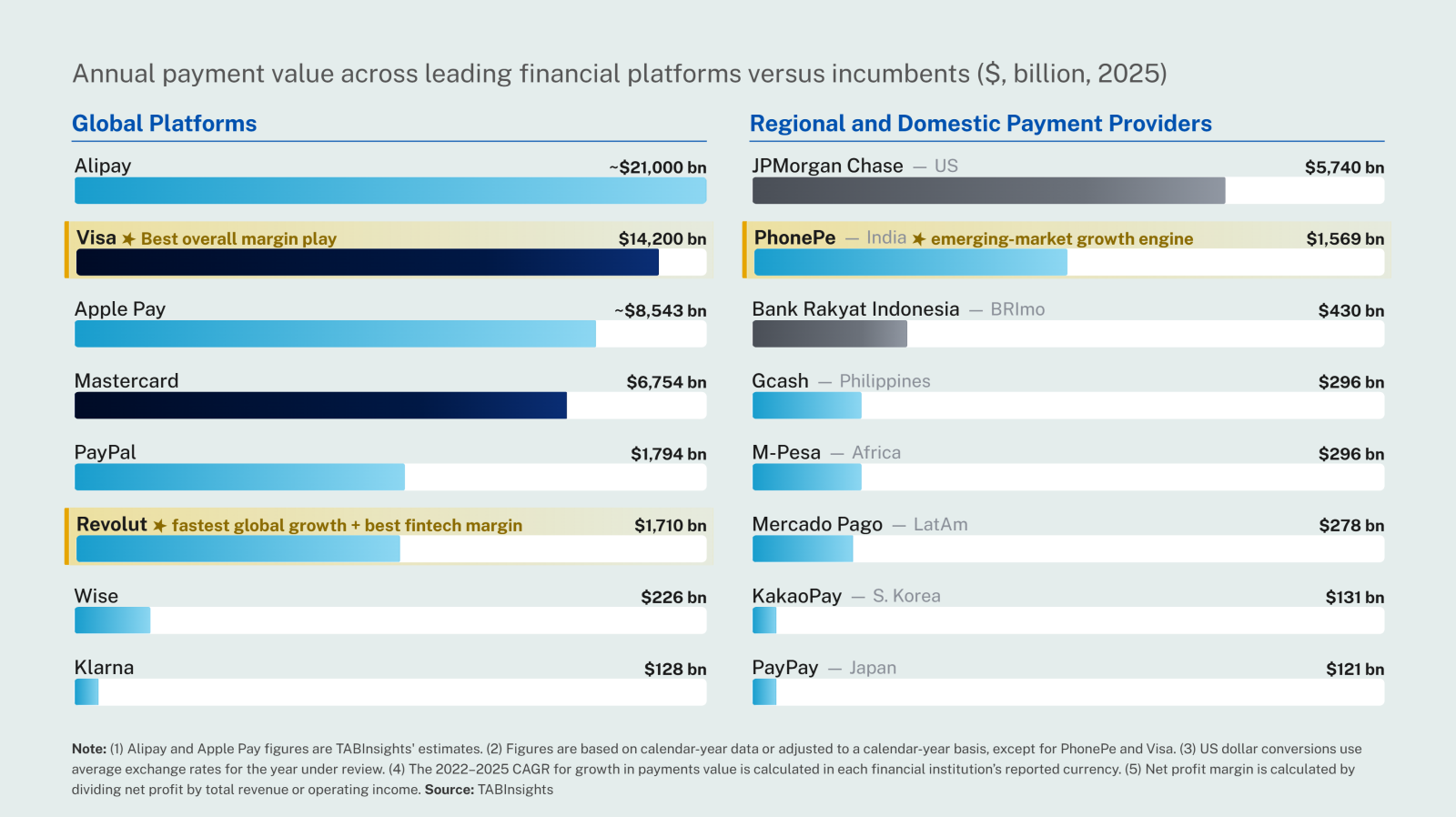
Fintech platforms have evolved from payment apps into formidable competitors to banks, using payments as a gateway to credit, savings, investments, insurance and merchant services, often without the cost and regulatory burden of a full banking licence. The world's largest platforms show that this model can deliver both enormous scale and, in most cases, strong profitability.
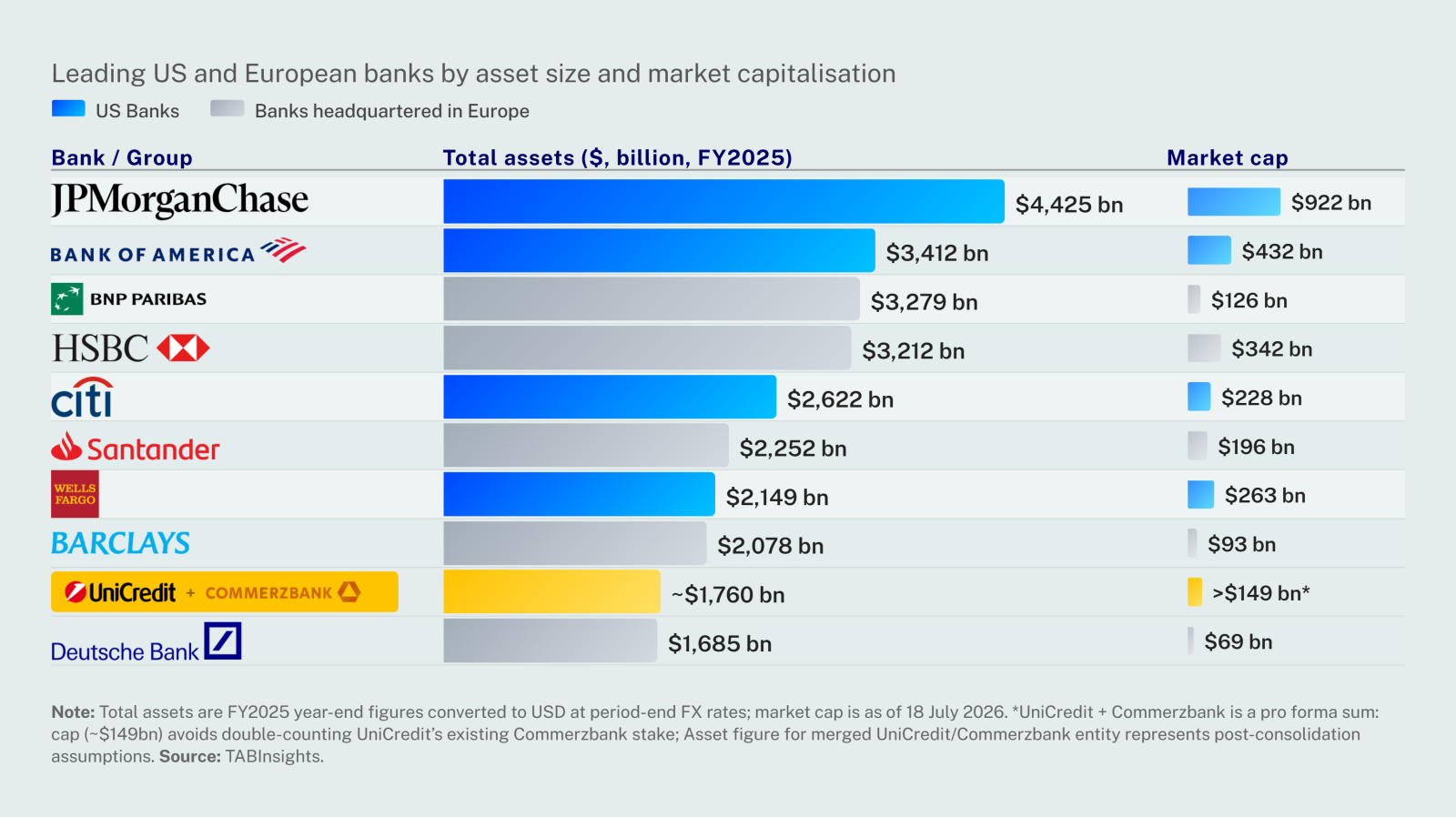
UniCredit’s path to taking full control of Commerzbank by the end of 2026 represents a decisive test of European banking consolidation, challenging political resistance and signalling that shareholder interests may increasingly outweigh national protectionism in shaping the region’s banking landscape. The resulting model would leave Commerzbank with a smaller, more focused international network designed primarily to support German, Polish and other European corporate clients rather than operate as a dispersed global lending franchise.
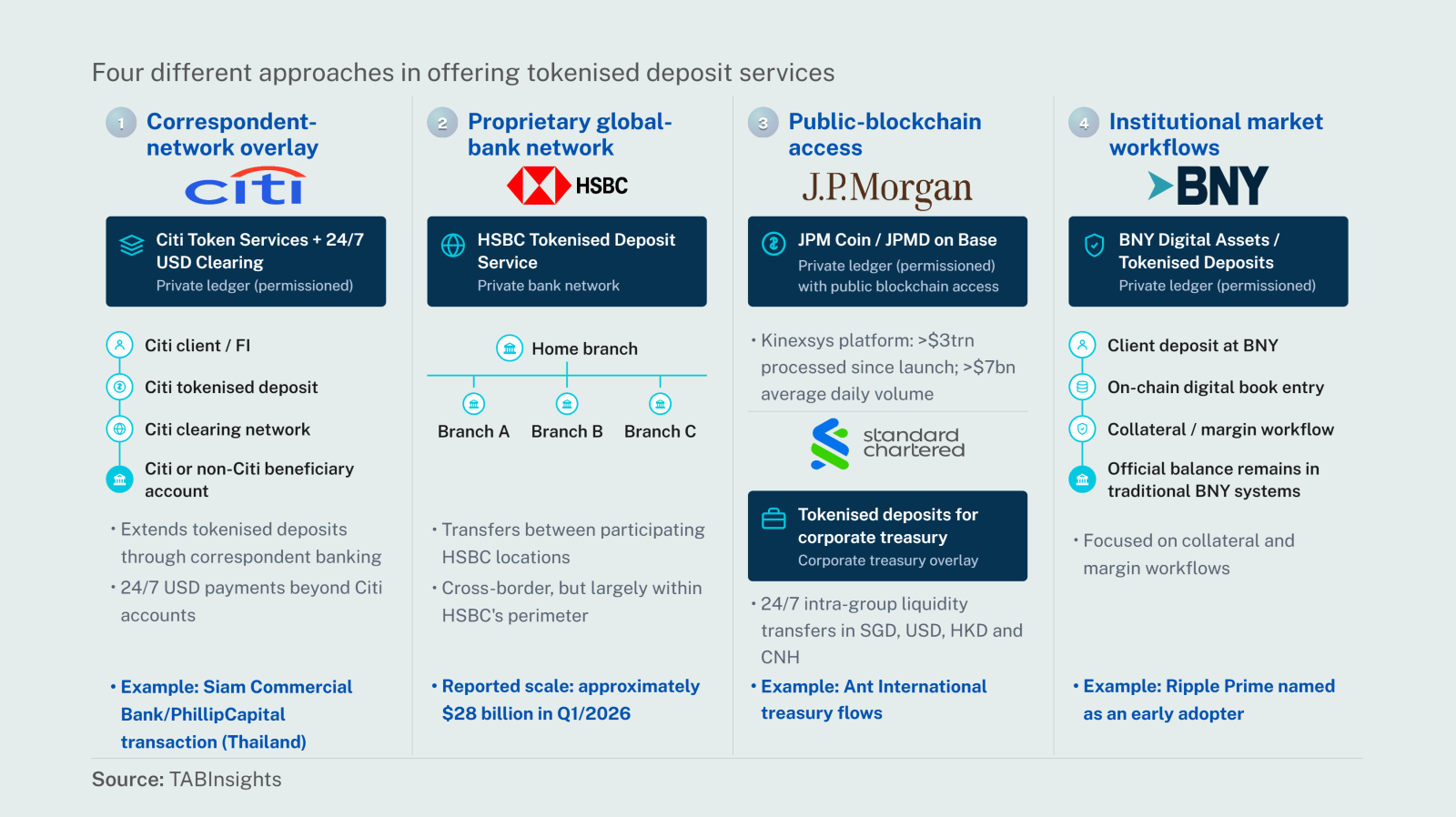
Siam Commercial Bank’s adoption of Citi’s integrated 24/7 USD Clearing and Token Services extends round-the-clock tokenised payments beyond Citi’s own accounts. But as HSBC, J.P. Morgan, Standard Chartered and BNY pursue alternative models, and shared ledgers gain momentum, the competition is shifting from first-mover advantage to interoperability and network scale.
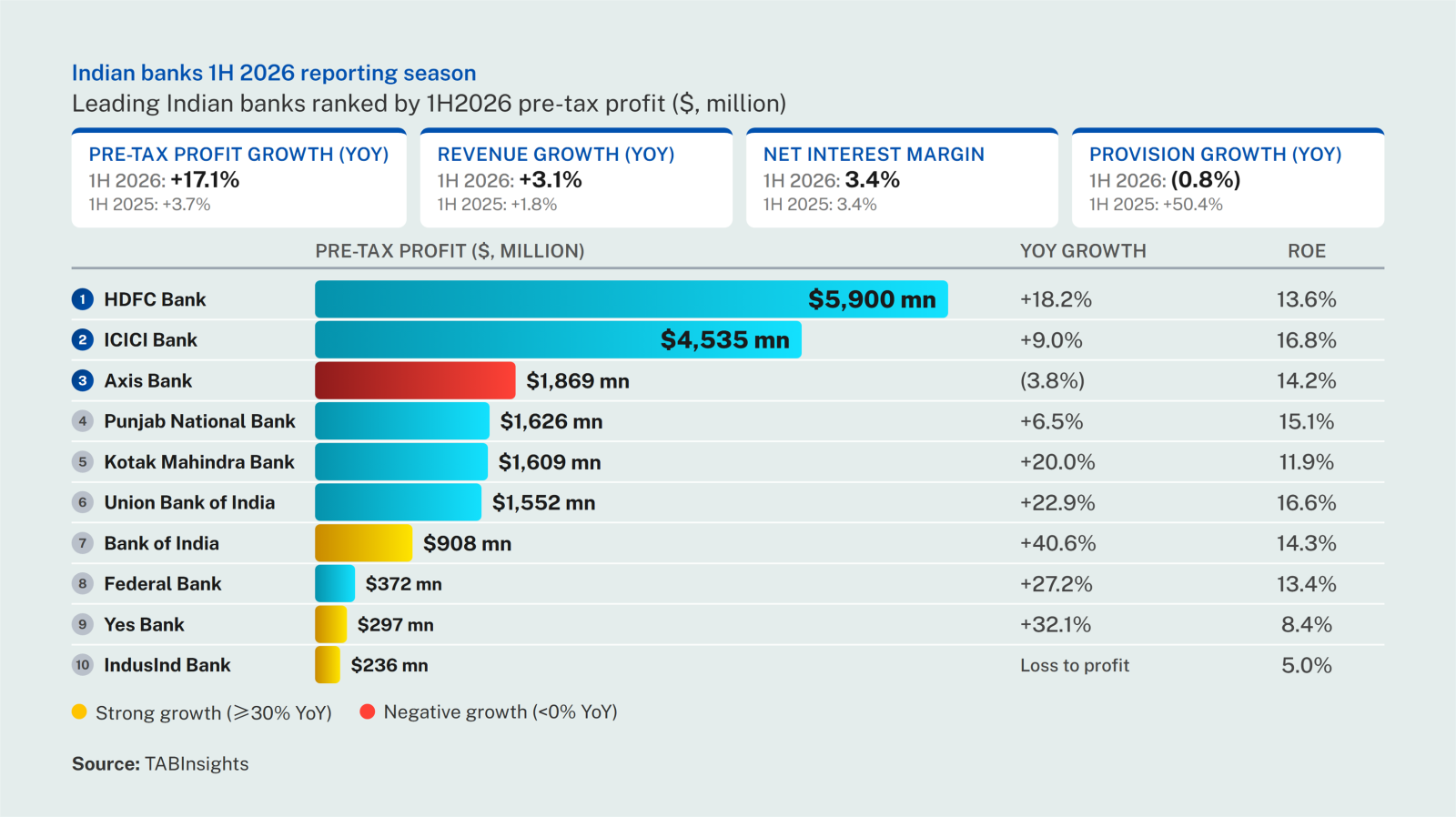
Indian lenders posted stronger first-half profits as lower loan provisions boosted earnings, but weak revenue growth and margin pressure point to a more challenging outlook.